Cost control
The 7 Best Spend Management Platforms for Startups in 2026
This guide compares spend management platforms built for early-stage startups, focusing on SaaS visibility, speed to value, and day-to-day usability. It is written for founders and ops leads managing burn rate and shadow IT without dedicated finance support.


TL;DR: Spend management platforms at a glance
Best overall for startup visibility
Subsight leads for card-agnostic SaaS tracking and fast spend visibility. No bank switching or card rollout required. Teams can see subscription exposure, renewal risk, and shadow IT from existing payment data.
Best for corporate card + expense control
Card-linked platforms fit companies ready to centralize purchasing. Finance gains policy controls, real-time limits, and employee spend oversight across travel, software, and operational costs.
Best for finance-led procurement
Heavier suites support approvals, purchase orders, and ERP sync. Useful once finance teams formalize procurement and compliance workflows.
Fastest time-to-value
Tools that connect to existing accounts surface spend in days. Faster insight, faster cost correction.
When to upgrade
Enterprise complexity pays off only when scale demands governance, not before.
Best spend management software for startups
Spend management software for startups helps teams track expenses, subscriptions, and vendor payments in one system. Early-stage companies prioritize visibility into SaaS spend and renewals, while scaling teams add card controls, approvals, and procurement workflows as finance operations mature.
How we ranked these spend management platforms
Evaluation criteria for startup teams
We evaluated each platform through a startup operations lens. Priority went to real-time visibility, SaaS detection accuracy, renewal tracking, and rollout speed. We also assessed reporting clarity, alerting, and usability for teams without finance training.
Weighting: Visibility vs control vs complexity
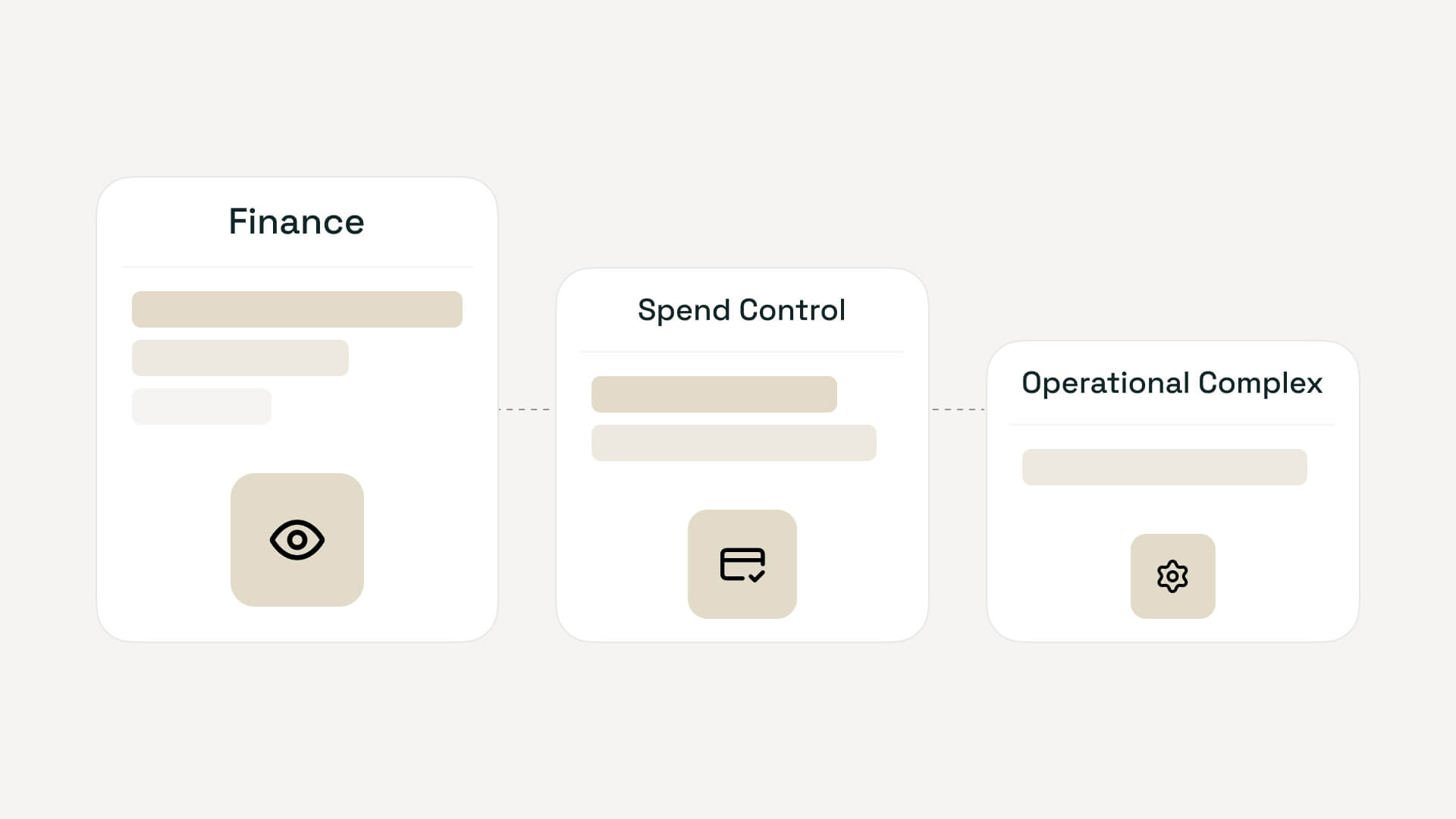
Visibility carried the most weight. Early teams need awareness before governance. Control layers such as approvals and card policies ranked second. Complexity acted as a negative factor when implementation slowed adoption or required finance infrastructure startups typically lack.
Data sources & hands-on testing
Rankings combined product walkthroughs, sandbox testing, user feedback, and feature validation. We modeled real startup environments, including distributed purchasing and multi-card spend, to assess detection depth and onboarding friction.
Who this list is (and isn’t) for
This list serves founders, operators, and lean finance teams between 10 and 50 employees. It is not built for enterprise procurement leaders or global finance departments managing multi-entity compliance.
Teams outside this bracket can explore tailored frameworks across startup spend management use cases.
Platform fit: Startup spend management decision matrix
Platform Type | Best For Stage | Primary Strength | Time to Value | Card Dependency | Operational Complexity |
|---|---|---|---|---|---|
SaaS Visibility Platforms | 10–50 employees | Subscription discovery & renewal tracking | Same day | None | Low |
Corporate Card Platforms | 20–75 employees | Spend controls & policy enforcement | 2–4 weeks | Required | Moderate |
Spend + Procurement Suites | 50–200 employees | Approvals, POs, vendor management | 4–8 weeks | Partial | High |
Enterprise Procurement Platforms | 200+ employees | Compliance & sourcing governance | 3–6 months | None | Very high |
The 7 best spend management platforms for startups in 2026
#1 Subsight — Card-agnostic SaaS visibility without bank migration
Core capabilities
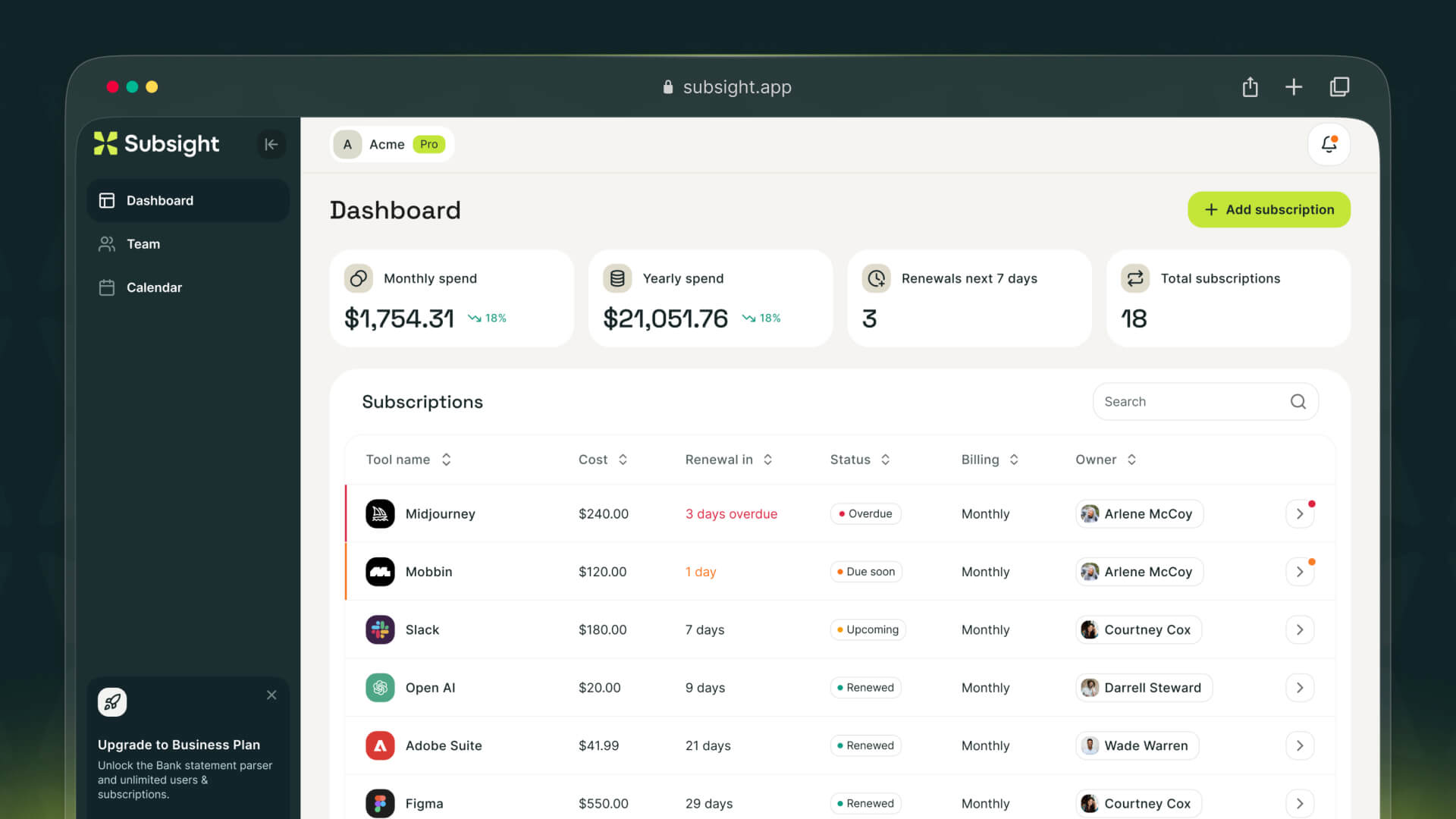
Subsight focuses on SaaS spend visibility without requiring payment changes. It detects tools across cards and accounts, tracks renewals, flags duplicates, and categorizes decentralized purchases. Renewal timelines and vendor exposure anchor the dashboard.
For a deeper walkthrough, see how teams uncover vendor sprawl in the guide on hidden monthly subscriptions.
Pros & cons
Pros
No bank or card migration required
Fast SaaS detection across distributed spend
Renewal tracking and alerts built in
Designed for non-finance operators
Cons
No corporate card issuance
Limited procurement workflows
Not built for PO-heavy environments
Ideal use cases
Founder-led purchasing environments.
Ops teams managing shadow IT.
Startups without formal finance infrastructure.
Implementation & time-to-value
Factor | Reality |
|---|---|
Setup time | Same day |
Data sources | Cards, bank exports |
Training required | Minimal |
Initial insights | Within first login |
The startup contrast
Enterprise tools require card consolidation
Procurement suites assume finance teams
Subsight surfaces spend before governance layers exist
Best spend management software for startups
Spend management software for startups helps teams track expenses, subscriptions, and vendor payments in one system. Early-stage companies prioritize visibility into SaaS spend and renewals, while scaling teams add card controls, approvals, and procurement workflows as finance operations mature.
How we ranked these spend management platforms
Evaluation criteria for startup teams
We evaluated each platform through a startup operations lens. Priority went to real-time visibility, SaaS detection accuracy, renewal tracking, and rollout speed. We also assessed reporting clarity, alerting, and usability for teams without finance training.
Weighting: Visibility vs control vs complexity
Visibility carried the most weight. Early teams need awareness before governance. Control layers such as approvals and card policies ranked second. Complexity acted as a negative factor when implementation slowed adoption or required finance infrastructure startups typically lack.
Data sources & hands-on testing
Rankings combined product walkthroughs, sandbox testing, user feedback, and feature validation. We modeled real startup environments, including distributed purchasing and multi-card spend, to assess detection depth and onboarding friction.
Who this list is (and isn’t) for
This list serves founders, operators, and lean finance teams between 10 and 50 employees. It is not built for enterprise procurement leaders or global finance departments managing multi-entity compliance.
Teams outside this bracket can explore tailored frameworks across startup spend management use cases.
Platform fit: Startup spend management decision matrix
Platform Type | Best For Stage | Primary Strength | Time to Value | Card Dependency | Operational Complexity |
|---|---|---|---|---|---|
SaaS Visibility Platforms | 10–50 employees | Subscription discovery & renewal tracking | Same day | None | Low |
Corporate Card Platforms | 20–75 employees | Spend controls & policy enforcement | 2–4 weeks | Required | Moderate |
Spend + Procurement Suites | 50–200 employees | Approvals, POs, vendor management | 4–8 weeks | Partial | High |
Enterprise Procurement Platforms | 200+ employees | Compliance & sourcing governance | 3–6 months | None | Very high |
The 7 best spend management platforms for startups in 2026
#1 Subsight — Card-agnostic SaaS visibility without bank migration
Core capabilities
Subsight focuses on SaaS spend visibility without requiring payment changes. It detects tools across cards and accounts, tracks renewals, flags duplicates, and categorizes decentralized purchases. Renewal timelines and vendor exposure anchor the dashboard.
For a deeper walkthrough, see how teams uncover vendor sprawl in the guide on hidden monthly subscriptions.
Pros & cons
Pros
No bank or card migration required
Fast SaaS detection across distributed spend
Renewal tracking and alerts built in
Designed for non-finance operators
Cons
No corporate card issuance
Limited procurement workflows
Not built for PO-heavy environments
Ideal use cases
Founder-led purchasing environments.
Ops teams managing shadow IT.
Startups without formal finance infrastructure.
Implementation & time-to-value
Factor | Reality |
|---|---|
Setup time | Same day |
Data sources | Cards, bank exports |
Training required | Minimal |
Initial insights | Within first login |
The startup contrast
Enterprise tools require card consolidation
Procurement suites assume finance teams
Subsight surfaces spend before governance layers exist


Track your SaaS spend
Get full visibility into subscriptions, owners, and upcoming renewals.

#2 Brex — Corporate cards + built-in spend controls
Core capabilities
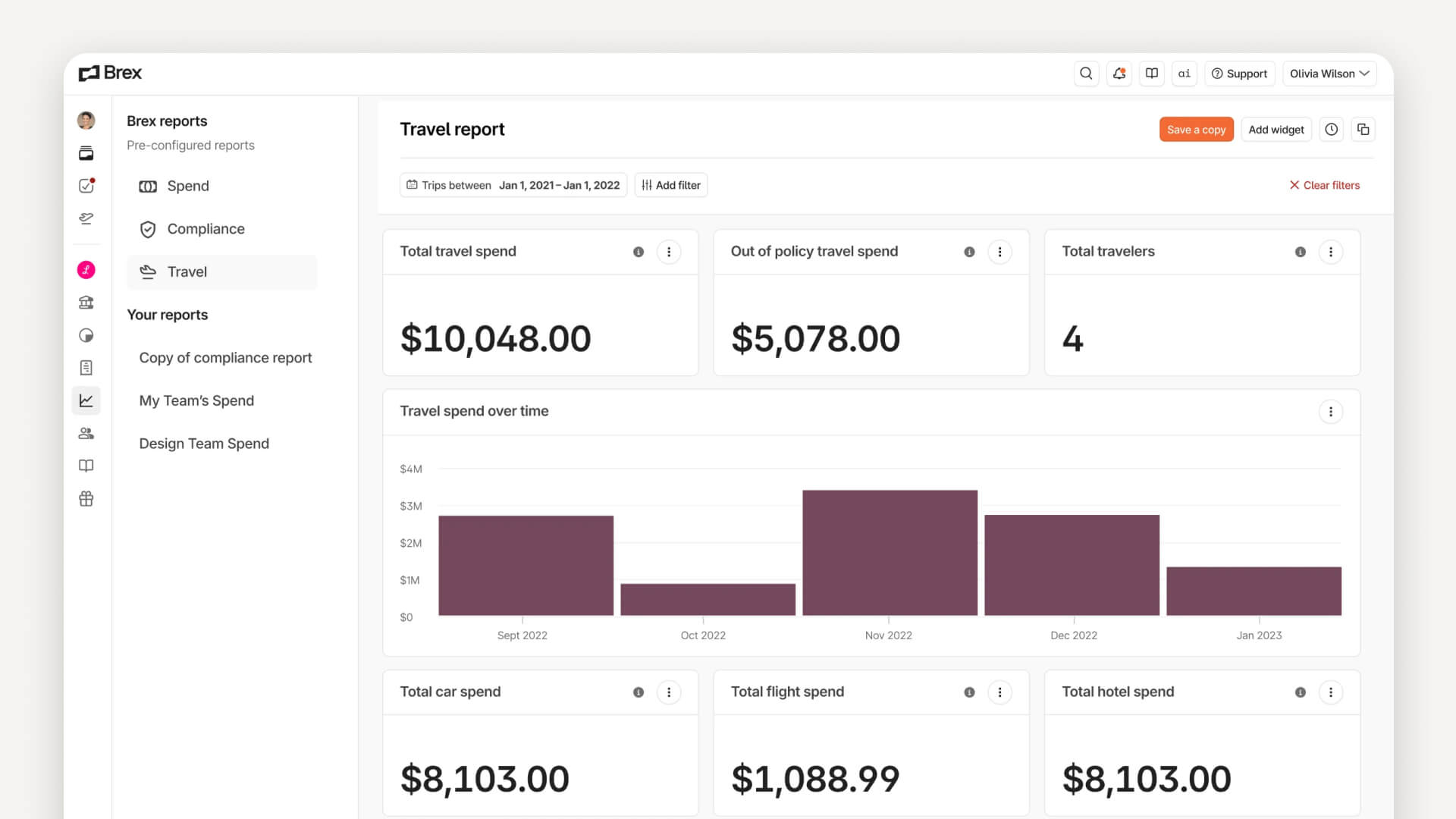
Brex combines corporate cards with expense management and policy controls. Finance teams issue cards, set limits, and track spend across software, travel, and operating costs within a unified ledger.
Pros & cons
Pros
Integrated cards and expense tracking
Real-time spend controls
Cashback and rewards structures
Cons
Requires payment consolidation
Less visibility into non-card SaaS
Onboarding tied to underwriting
Implementation & time-to-value
Factor | Reality |
|---|---|
Setup time | 2–3 weeks |
Card rollout | Required |
Finance involvement | High |
Insight depth | Card dependent |
The startup contrast
Strong for controlled purchasing
Limited for decentralized SaaS discovery
Finance-first, not visibility-first
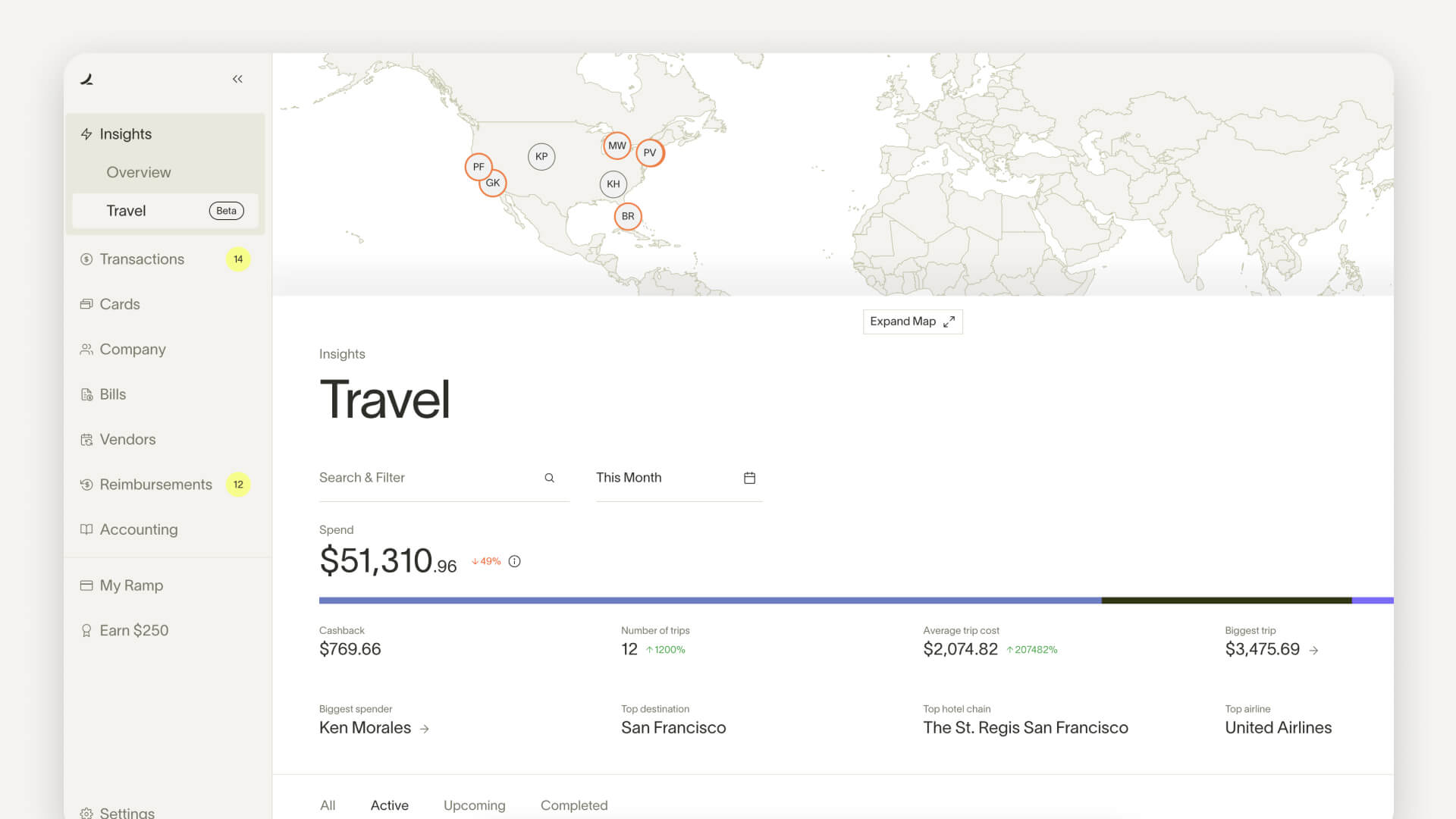
#3 Ramp — Finance automation meets card spend
Core capabilities
Ramp pairs corporate cards with automation. It surfaces savings insights, flags duplicate tools, and embeds approval workflows. Cost analysis centers on card transaction data.
Pros & cons
Pros
Automated savings recommendations
Card + expense unification
Built-in approval flows
Cons
Visibility limited to issued cards
SaaS detection less comprehensive
Requires spend migration
Implementation & time-to-value
Factor | Reality |
|---|---|
Setup time | 2–4 weeks |
Card dependency | Full |
Policy setup | Required |
ROI visibility | Post-rollout |
The startup contrast
Automation strong after consolidation
Less effective for shadow IT mapping
Savings insights rely on card coverage
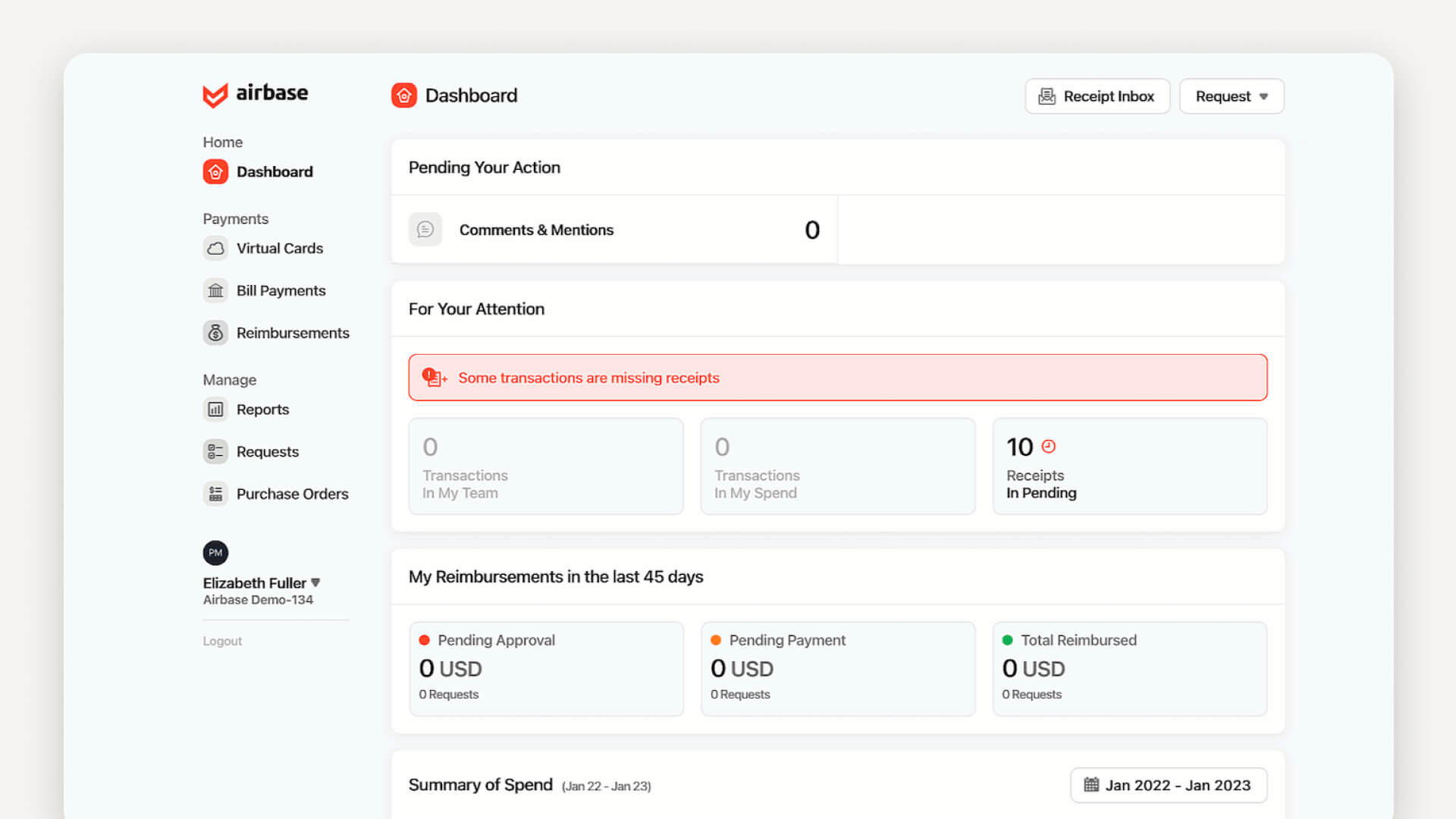
#4 Airbase — Mid-market spend + procurement suite
Core capabilities
Airbase combines cards, expenses, bill pay, and procurement in one system. It supports approval chains, vendor onboarding, and accounting integrations for scaling finance teams.
Pros & cons
Pros
End-to-end spend lifecycle
PO and approval workflows
ERP integrations
Cons
Longer onboarding cycles
Requires finance ownership
Overbuilt for lean teams
Implementation & time-to-value
Factor | Reality |
|---|---|
Setup time | 4–8 weeks |
Procurement setup | Extensive |
Training required | Moderate |
Accounting sync | Deep |
The startup contrast
Built for finance maturity
Heavy lift for ops-led startups
Governance before visibility
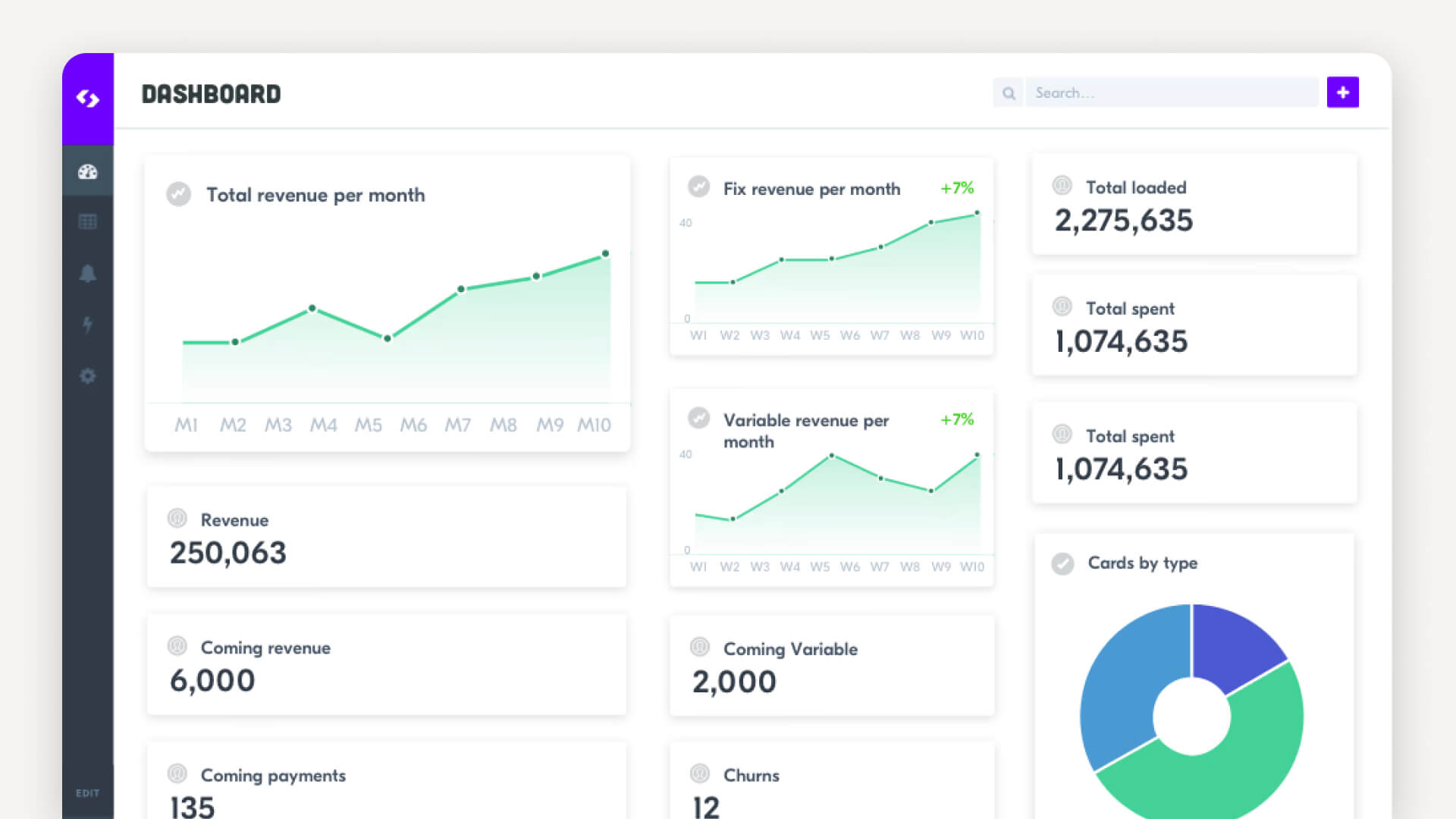
#5 Spendesk — European spend + card infrastructure
Core capabilities
Spendesk offers corporate cards, invoice management, and expense tracking with strong European banking support. It handles multi-entity spend and regional compliance requirements.
Pros & cons
Pros
EU-focused banking support
Invoice + card unification
Approval routing
Cons
SaaS discovery limited
Requires card adoption
Less flexible outside EU stacks
Implementation & time-to-value
Factor | Reality |
|---|---|
Setup time | 3–5 weeks |
Card issuance | Required |
Finance setup | Moderate |
Visibility scope | Card + invoices |
The startup contrast
Strong regional infrastructure
Limited decentralized tracking
Finance workflow oriented
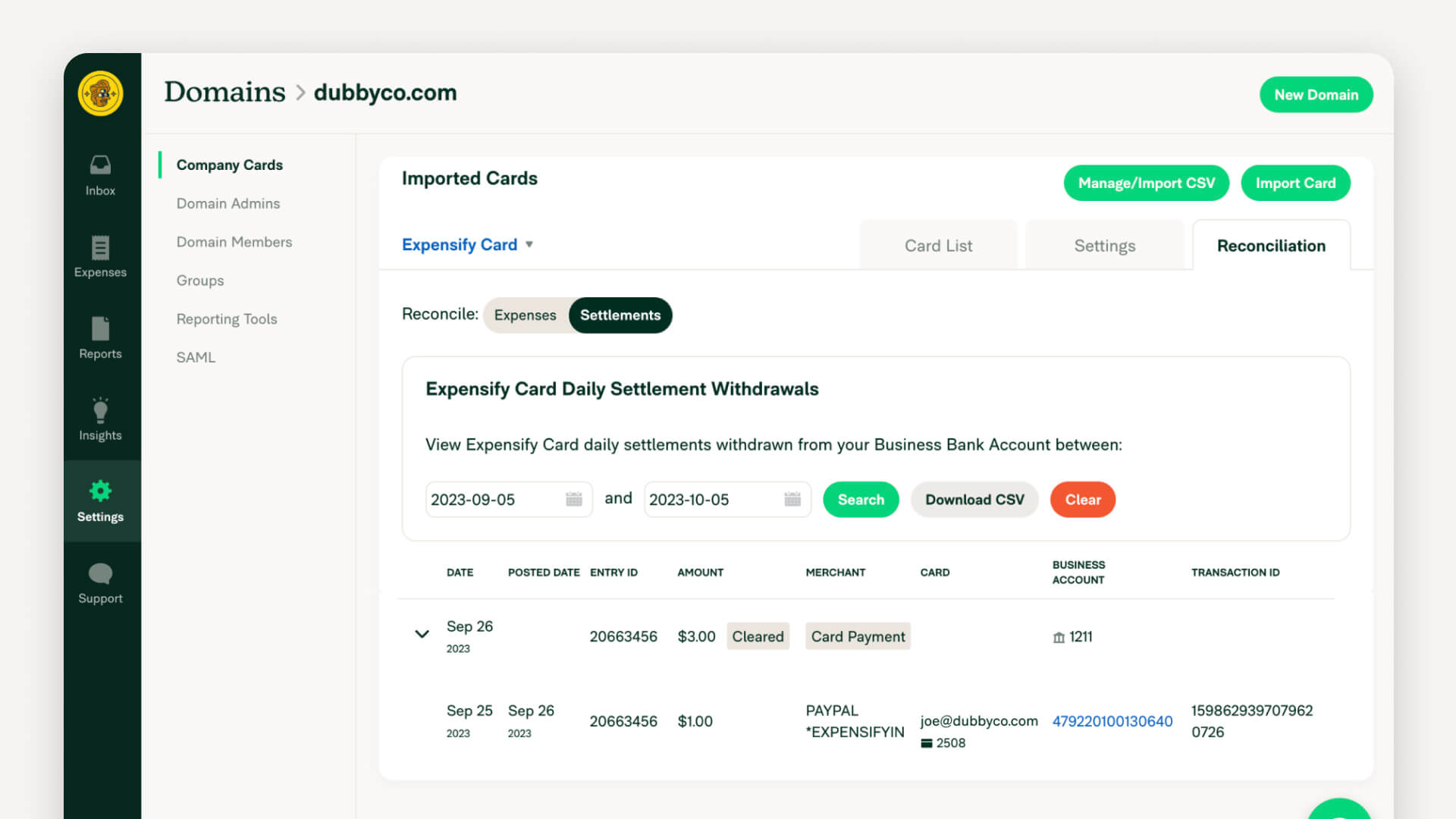
#6 Expensify — Expense tracking first, spend second
Core capabilities
Expensify centers on receipt capture, reimbursements, and employee expenses. It streamlines reporting and approvals but plays a narrower role in proactive spend oversight.
Pros & cons
Pros
Fast receipt scanning
Employee reimbursement workflows
Accounting integrations
Cons
Limited subscription tracking
Reactive, not proactive visibility
No vendor lifecycle monitoring
Implementation & time-to-value
Factor | Reality |
|---|---|
Setup time | 1–2 weeks |
Employee training | Required |
SaaS detection | Minimal |
Reporting depth | Expense focused |
The startup contrast
Strong for travel and expenses
Weak for SaaS mapping
Post-spend visibility only
#7 Coupa — Enterprise procurement & spend governance
Core capabilities
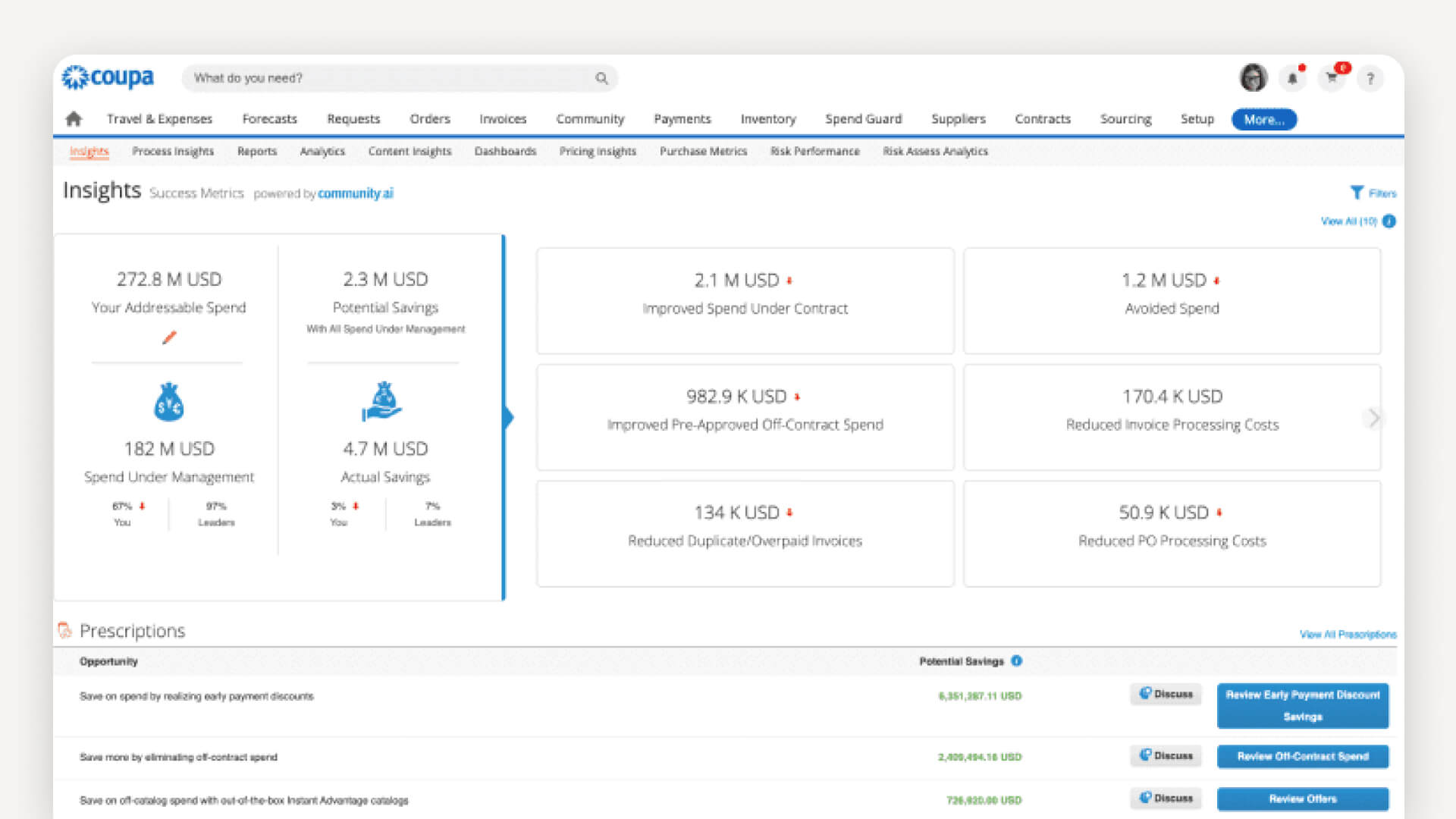
Coupa delivers procurement, supplier management, sourcing, and compliance governance. It integrates deeply with ERP systems and supports global purchasing operations.
Pros & cons
Pros
Full procurement lifecycle
Supplier risk management
Enterprise compliance tooling
Cons
Lengthy implementation
Requires dedicated procurement teams
Excess complexity for startups
Implementation & time-to-value
Factor | Reality |
|---|---|
Setup time | 3–6 months |
ERP integration | Required |
Training scope | Extensive |
Initial ROI | Delayed |
The startup contrast
Built for regulated scale
Procurement-first architecture
Misaligned with early-stage velocity
How these spend platforms actually differ
While most spend platforms appear similar at a feature level, they operate on fundamentally different architectural models.
Card-first platforms such as Brex and Ramp center on controlled purchasing. Their value compounds once companies migrate spend onto issued cards, enabling policy enforcement and real-time controls. However, visibility remains limited to transactions flowing through those payment rails.
Mid-market platforms like Airbase and Spendesk expand into procurement territory. They layer invoice management, approval workflows, and vendor onboarding on top of expense infrastructure. This suits finance-led organizations but increases onboarding and operational complexity.
Expense-focused tools such as Expensify remain reimbursement-centric. They streamline receipt capture and reporting but offer limited proactive SaaS monitoring.
At the enterprise end, procurement suites like Coupa prioritize supplier governance, sourcing controls, and compliance frameworks. These systems are designed for regulated scale rather than startup velocity.
Understanding these architectural differences is often more useful than comparing feature checklists alone.
Feature comparison: Compare SaaS management tools side-by-side
When comparing platforms, founders often prioritize detection depth over reimbursement tooling. Broader context on evaluation criteria can be found in the overview of subscription tracker platforms.
Platform capability matrix
Platform | SaaS Tracking | Corporate Cards | Expense Mgmt | Procurement | Accounting Sync |
|---|---|---|---|---|---|
Subsight | Yes | No | Limited | No | Yes |
Brex | Partial | Yes | Yes | No | Yes |
Ramp | Partial | Yes | Yes | No | Yes |
Airbase | Partial | Yes | Yes | Yes | Yes |
Spendesk | Partial | Yes | Yes | Yes | Yes |
Expensify | No | No | Yes | No | Yes |
Coupa | No | No | Yes | Yes | Yes |
SaaS tracking depth
Platform | Detection Method | Coverage | Duplicate App Alerts |
|---|---|---|---|
Subsight | Card + bank data | High | Yes |
Brex | Card transactions | Medium | Limited |
Ramp | Card transactions | Medium | Yes |
Airbase | Bill pay + cards | Medium | Limited |
Spendesk | Cards + invoices | Medium | Limited |
Expensify | Manual / receipts | Low | No |
Coupa | Vendor records | Low | No |
Card dependency vs card-agnostic models
Platform | Requires Issued Cards | Works With Existing Cards | Bank Migration Needed |
|---|---|---|---|
Subsight | No | Yes | No |
Brex | Yes | Limited | Yes |
Ramp | Yes | Limited | Yes |
Airbase | Yes | Partial | Often |
Spendesk | Yes | Partial | Often |
Expensify | No | Yes | No |
Coupa | No | Yes | ERP dependent |
Renewal visibility & alerts
Platform | Renewal Tracking | Alerting | Forecasting |
|---|---|---|---|
Subsight | Yes | Real time | Yes |
Brex | Limited | Basic | No |
Ramp | Limited | Basic | Limited |
Airbase | Invoice based | Conditional | Limited |
Spendesk | Invoice based | Conditional | Limited |
Expensify | No | No | No |
Coupa | Contract based | Yes | Yes |
SaaS cost optimization: Reduce waste without procurement
Where SaaS waste hides
Most startup spend doesn’t grow through deliberate planning. It accumulates quietly across teams. Duplicate tools run in parallel. Seats remain active after role changes. Some subscriptions have no clear owner at all.
Common subscription waste patterns include:
Duplicates across teams
Seats that were never reassigned
Tools still billed after offboarding
Annual renewals with no internal owner
Without centralized visibility, vendor overlap and low license utilization stay hidden inside bank statements rather than surfaced operationally.
Renewal timing: Your leverage point
Renewals are where cost control actually happens. Monthly plans create flexibility, but annual contracts carry the biggest financial impact. If renewal timelines aren’t tracked, contracts auto-extend before teams reassess usage.
Mapping a renewal calendar changes the equation. Assign an owner to each contract renewal. Review usage before billing dates. Decide whether to keep, cancel, downgrade, or renegotiate.
For startups managing burn rate, renewal visibility directly influences runway planning.
Vendor consolidation without friction
Consolidation works best after visibility exists, not before. When teams understand what tools overlap, they can standardize by function instead of forcing premature procurement processes.
Vendor consolidation often starts with categories rather than contracts. Communication tools, analytics platforms, and design software are common consolidation candidates. The goal is reducing tool redundancy while preserving team workflows.
This approach lowers SaaS spend without introducing heavy approval layers or slowing operational velocity.
#2 Brex — Corporate cards + built-in spend controls
Core capabilities
Brex combines corporate cards with expense management and policy controls. Finance teams issue cards, set limits, and track spend across software, travel, and operating costs within a unified ledger.
Pros & cons
Pros
Integrated cards and expense tracking
Real-time spend controls
Cashback and rewards structures
Cons
Requires payment consolidation
Less visibility into non-card SaaS
Onboarding tied to underwriting
Implementation & time-to-value
Factor | Reality |
|---|---|
Setup time | 2–3 weeks |
Card rollout | Required |
Finance involvement | High |
Insight depth | Card dependent |
The startup contrast
Strong for controlled purchasing
Limited for decentralized SaaS discovery
Finance-first, not visibility-first
#3 Ramp — Finance automation meets card spend
Core capabilities
Ramp pairs corporate cards with automation. It surfaces savings insights, flags duplicate tools, and embeds approval workflows. Cost analysis centers on card transaction data.
Pros & cons
Pros
Automated savings recommendations
Card + expense unification
Built-in approval flows
Cons
Visibility limited to issued cards
SaaS detection less comprehensive
Requires spend migration
Implementation & time-to-value
Factor | Reality |
|---|---|
Setup time | 2–4 weeks |
Card dependency | Full |
Policy setup | Required |
ROI visibility | Post-rollout |
The startup contrast
Automation strong after consolidation
Less effective for shadow IT mapping
Savings insights rely on card coverage
#4 Airbase — Mid-market spend + procurement suite
Core capabilities
Airbase combines cards, expenses, bill pay, and procurement in one system. It supports approval chains, vendor onboarding, and accounting integrations for scaling finance teams.
Pros & cons
Pros
End-to-end spend lifecycle
PO and approval workflows
ERP integrations
Cons
Longer onboarding cycles
Requires finance ownership
Overbuilt for lean teams
Implementation & time-to-value
Factor | Reality |
|---|---|
Setup time | 4–8 weeks |
Procurement setup | Extensive |
Training required | Moderate |
Accounting sync | Deep |
The startup contrast
Built for finance maturity
Heavy lift for ops-led startups
Governance before visibility
#5 Spendesk — European spend + card infrastructure
Core capabilities
Spendesk offers corporate cards, invoice management, and expense tracking with strong European banking support. It handles multi-entity spend and regional compliance requirements.
Pros & cons
Pros
EU-focused banking support
Invoice + card unification
Approval routing
Cons
SaaS discovery limited
Requires card adoption
Less flexible outside EU stacks
Implementation & time-to-value
Factor | Reality |
|---|---|
Setup time | 3–5 weeks |
Card issuance | Required |
Finance setup | Moderate |
Visibility scope | Card + invoices |
The startup contrast
Strong regional infrastructure
Limited decentralized tracking
Finance workflow oriented
#6 Expensify — Expense tracking first, spend second
Core capabilities
Expensify centers on receipt capture, reimbursements, and employee expenses. It streamlines reporting and approvals but plays a narrower role in proactive spend oversight.
Pros & cons
Pros
Fast receipt scanning
Employee reimbursement workflows
Accounting integrations
Cons
Limited subscription tracking
Reactive, not proactive visibility
No vendor lifecycle monitoring
Implementation & time-to-value
Factor | Reality |
|---|---|
Setup time | 1–2 weeks |
Employee training | Required |
SaaS detection | Minimal |
Reporting depth | Expense focused |
The startup contrast
Strong for travel and expenses
Weak for SaaS mapping
Post-spend visibility only
#7 Coupa — Enterprise procurement & spend governance
Core capabilities
Coupa delivers procurement, supplier management, sourcing, and compliance governance. It integrates deeply with ERP systems and supports global purchasing operations.
Pros & cons
Pros
Full procurement lifecycle
Supplier risk management
Enterprise compliance tooling
Cons
Lengthy implementation
Requires dedicated procurement teams
Excess complexity for startups
Implementation & time-to-value
Factor | Reality |
|---|---|
Setup time | 3–6 months |
ERP integration | Required |
Training scope | Extensive |
Initial ROI | Delayed |
The startup contrast
Built for regulated scale
Procurement-first architecture
Misaligned with early-stage velocity
How these spend platforms actually differ
While most spend platforms appear similar at a feature level, they operate on fundamentally different architectural models.
Card-first platforms such as Brex and Ramp center on controlled purchasing. Their value compounds once companies migrate spend onto issued cards, enabling policy enforcement and real-time controls. However, visibility remains limited to transactions flowing through those payment rails.
Mid-market platforms like Airbase and Spendesk expand into procurement territory. They layer invoice management, approval workflows, and vendor onboarding on top of expense infrastructure. This suits finance-led organizations but increases onboarding and operational complexity.
Expense-focused tools such as Expensify remain reimbursement-centric. They streamline receipt capture and reporting but offer limited proactive SaaS monitoring.
At the enterprise end, procurement suites like Coupa prioritize supplier governance, sourcing controls, and compliance frameworks. These systems are designed for regulated scale rather than startup velocity.
Understanding these architectural differences is often more useful than comparing feature checklists alone.
Feature comparison: Compare SaaS management tools side-by-side
When comparing platforms, founders often prioritize detection depth over reimbursement tooling. Broader context on evaluation criteria can be found in the overview of subscription tracker platforms.
Platform capability matrix
Platform | SaaS Tracking | Corporate Cards | Expense Mgmt | Procurement | Accounting Sync |
|---|---|---|---|---|---|
Subsight | Yes | No | Limited | No | Yes |
Brex | Partial | Yes | Yes | No | Yes |
Ramp | Partial | Yes | Yes | No | Yes |
Airbase | Partial | Yes | Yes | Yes | Yes |
Spendesk | Partial | Yes | Yes | Yes | Yes |
Expensify | No | No | Yes | No | Yes |
Coupa | No | No | Yes | Yes | Yes |
SaaS tracking depth
Platform | Detection Method | Coverage | Duplicate App Alerts |
|---|---|---|---|
Subsight | Card + bank data | High | Yes |
Brex | Card transactions | Medium | Limited |
Ramp | Card transactions | Medium | Yes |
Airbase | Bill pay + cards | Medium | Limited |
Spendesk | Cards + invoices | Medium | Limited |
Expensify | Manual / receipts | Low | No |
Coupa | Vendor records | Low | No |
Card dependency vs card-agnostic models
Platform | Requires Issued Cards | Works With Existing Cards | Bank Migration Needed |
|---|---|---|---|
Subsight | No | Yes | No |
Brex | Yes | Limited | Yes |
Ramp | Yes | Limited | Yes |
Airbase | Yes | Partial | Often |
Spendesk | Yes | Partial | Often |
Expensify | No | Yes | No |
Coupa | No | Yes | ERP dependent |
Renewal visibility & alerts
Platform | Renewal Tracking | Alerting | Forecasting |
|---|---|---|---|
Subsight | Yes | Real time | Yes |
Brex | Limited | Basic | No |
Ramp | Limited | Basic | Limited |
Airbase | Invoice based | Conditional | Limited |
Spendesk | Invoice based | Conditional | Limited |
Expensify | No | No | No |
Coupa | Contract based | Yes | Yes |
SaaS cost optimization: Reduce waste without procurement
Where SaaS waste hides
Most startup spend doesn’t grow through deliberate planning. It accumulates quietly across teams. Duplicate tools run in parallel. Seats remain active after role changes. Some subscriptions have no clear owner at all.
Common subscription waste patterns include:
Duplicates across teams
Seats that were never reassigned
Tools still billed after offboarding
Annual renewals with no internal owner
Without centralized visibility, vendor overlap and low license utilization stay hidden inside bank statements rather than surfaced operationally.
Renewal timing: Your leverage point
Renewals are where cost control actually happens. Monthly plans create flexibility, but annual contracts carry the biggest financial impact. If renewal timelines aren’t tracked, contracts auto-extend before teams reassess usage.
Mapping a renewal calendar changes the equation. Assign an owner to each contract renewal. Review usage before billing dates. Decide whether to keep, cancel, downgrade, or renegotiate.
For startups managing burn rate, renewal visibility directly influences runway planning.
Vendor consolidation without friction
Consolidation works best after visibility exists, not before. When teams understand what tools overlap, they can standardize by function instead of forcing premature procurement processes.
Vendor consolidation often starts with categories rather than contracts. Communication tools, analytics platforms, and design software are common consolidation candidates. The goal is reducing tool redundancy while preserving team workflows.
This approach lowers SaaS spend without introducing heavy approval layers or slowing operational velocity.

Still tracking this manually?
Subsight automatically maps your tools, owners, and renewal timelines in one place.
Implementation reality: Time to value by platform type
Same-day SaaS visibility
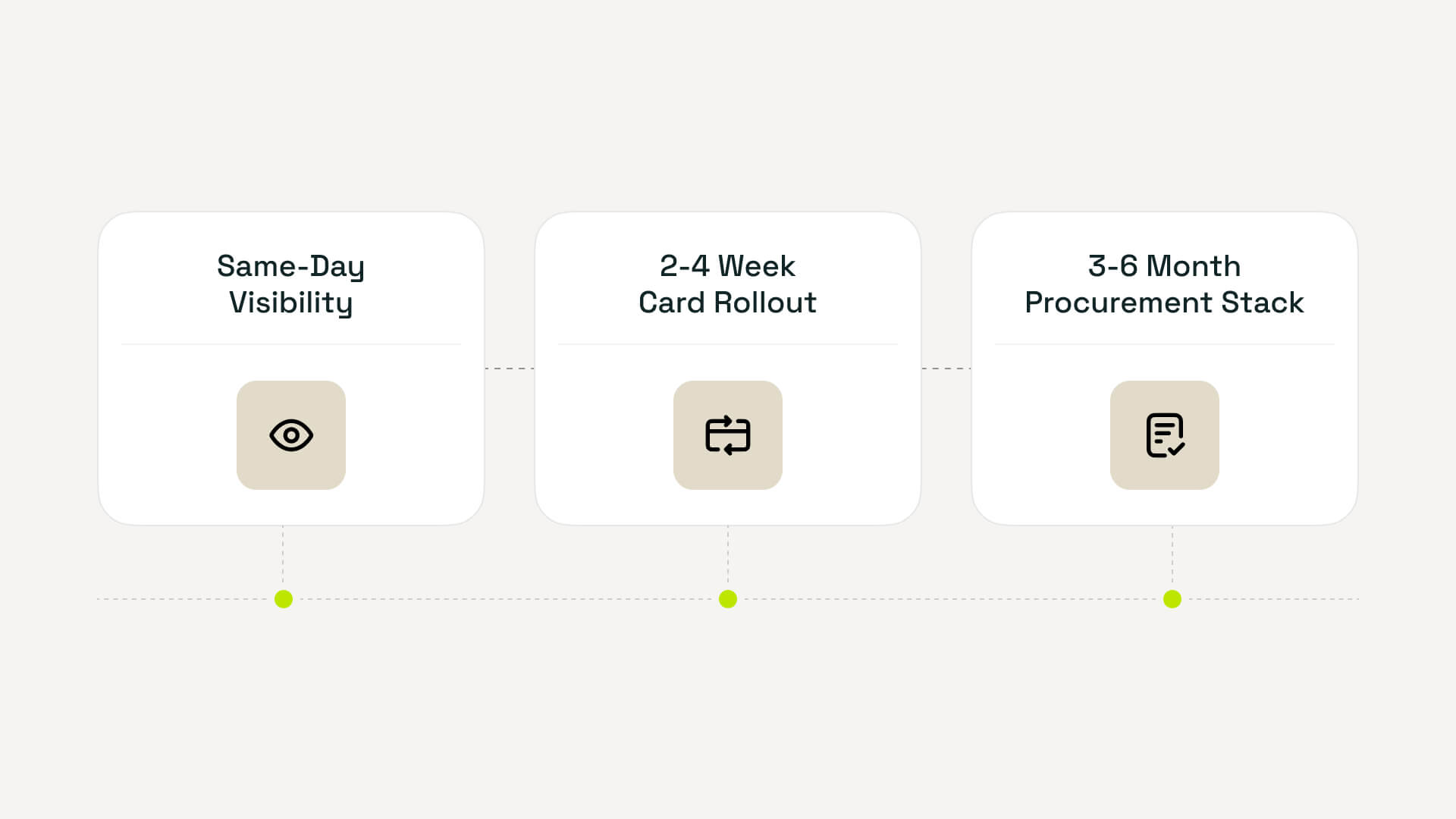
Visibility-first platforms deploy quickly because they connect to existing financial data. No card issuance or banking changes required. Teams import transactions and begin mapping subscriptions immediately, with renewal exposure visible in the first session.
This deployment model is typical among modern startup finance tooling stacks.
2–4 week finance stack rollouts
Card-led platforms take longer (G2 user implementation reviews show corporate card and expense platforms often require multi-week deployment). Companies must apply, onboard, issue cards, and migrate recurring payments. Policy configuration and approval routing add setup time. Value appears only after meaningful spend flows through newly issued cards.
Migration friction and team adoption
Payment migration creates friction. Employees replace cards, update billing details, and adjust workflows. Adoption slows when new finance systems arrive before teams are ready, delaying full spend visibility (Deloitte finance transformation research highlights change management as a primary adoption barrier).
Payment migration introduces more than workflow changes. Vendors must be re-billed to new cards. Subscription billing details need updating across dozens of tools. Failed payment risk increases during the transition window, especially for annual contracts tied to legacy payment rails (Stripe billing research links payment failures to involuntary churn).
Operationally, this creates sequencing challenges. Finance teams must coordinate card issuance, vendor updates, and employee communication simultaneously. Without structured rollout planning, visibility gaps can widen temporarily before systems stabilize.
This is why many startups prioritize detection and monitoring first, then layer payment consolidation later once spend ownership is clearly mapped.
Why we built Subsight: The spend management gap
The old way: Spreadsheets, bank exports, shadow IT
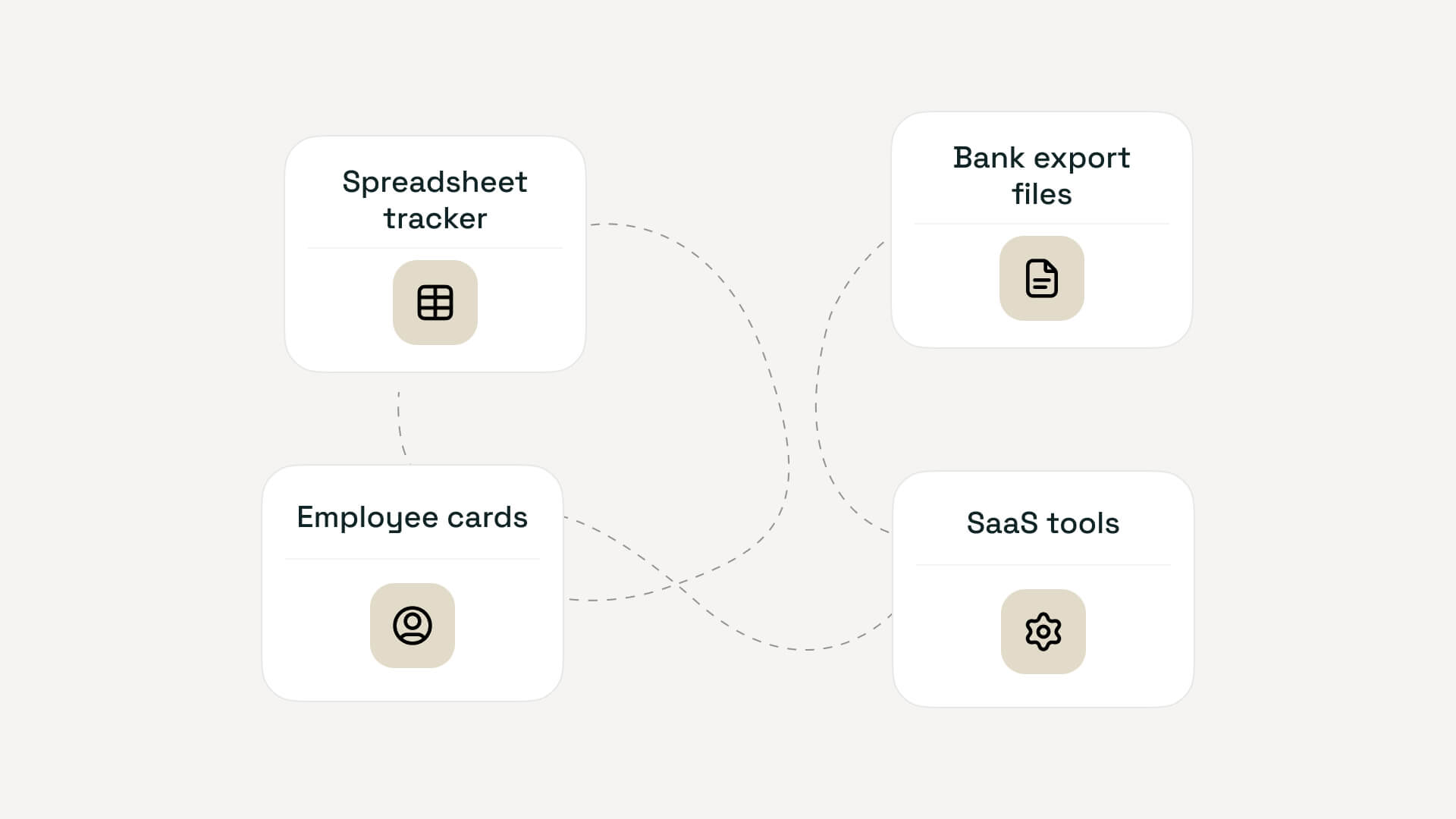
Early spend tracking lives in spreadsheets built from bank exports and inbox searches. Founders approve tools in Slack while team leads expense SaaS on personal cards. Vendors multiply, ownership blurs, and shadow IT becomes standard (BetterCloud State of SaaSOps Report).
This fragmentation is a common precursor to formal SaaS management adoption.
The visibility problem before finance scale
Most startups lack dedicated finance ops. There is no procurement layer, no centralized purchasing policy, and no enforced vendor registry. Traditional spend platforms assume those structures already exist. Without them, detection breaks down and reporting stays incomplete.
Burn rate anxiety & renewal surprises
Subscription creep builds unnoticed. Annual contracts renew without review (Gartner estimates organizations waste significant SaaS spend on unused licenses, cited via Flexera). Duplicate tools run in parallel. Budget reviews happen after cash leaves the account, directly impacting runway planning.
Building for speed, not procurement bureaucracy
Subsight was designed to surface spend before finance maturity. Onboarding is fast, payment rails stay unchanged, and subscriptions map immediately. Visibility comes first, governance later.
Choosing the right platform for your startup stage
Pre-finance teams (10–20 employees)
Spend is fragmented. Founders and team leads buy tools independently. Visibility matters more than control. Platforms that map subscriptions and renewals deliver immediate value without forcing payment changes.
As organizations scale, tooling often expands across specialized environments such as finance teams and IT & Ops teams.
Ops-led growth companies (20–50 employees)
Operations teams begin standardizing spend. Card programs, approvals, and vendor reviews emerge. The right stack balances SaaS visibility with light governance and reporting structure.
Finance-built organizations (50+ employees)
Dedicated finance teams formalize procurement. Purchase orders, invoice workflows, and accounting sync become standard. Platforms at this stage prioritize compliance, audit trails, and vendor lifecycle management.
When complexity starts paying off
Heavier systems make sense once spend volume, regulatory pressure, and headcount justify operational drag. Before that point, complexity slows adoption and delays insight.
Implementation reality: Time to value by platform type
Same-day SaaS visibility
Visibility-first platforms deploy quickly because they connect to existing financial data. No card issuance or banking changes required. Teams import transactions and begin mapping subscriptions immediately, with renewal exposure visible in the first session.
This deployment model is typical among modern startup finance tooling stacks.
2–4 week finance stack rollouts
Card-led platforms take longer (G2 user implementation reviews show corporate card and expense platforms often require multi-week deployment). Companies must apply, onboard, issue cards, and migrate recurring payments. Policy configuration and approval routing add setup time. Value appears only after meaningful spend flows through newly issued cards.
Migration friction and team adoption
Payment migration creates friction. Employees replace cards, update billing details, and adjust workflows. Adoption slows when new finance systems arrive before teams are ready, delaying full spend visibility (Deloitte finance transformation research highlights change management as a primary adoption barrier).
Payment migration introduces more than workflow changes. Vendors must be re-billed to new cards. Subscription billing details need updating across dozens of tools. Failed payment risk increases during the transition window, especially for annual contracts tied to legacy payment rails (Stripe billing research links payment failures to involuntary churn).
Operationally, this creates sequencing challenges. Finance teams must coordinate card issuance, vendor updates, and employee communication simultaneously. Without structured rollout planning, visibility gaps can widen temporarily before systems stabilize.
This is why many startups prioritize detection and monitoring first, then layer payment consolidation later once spend ownership is clearly mapped.
Why we built Subsight: The spend management gap
The old way: Spreadsheets, bank exports, shadow IT
Early spend tracking lives in spreadsheets built from bank exports and inbox searches. Founders approve tools in Slack while team leads expense SaaS on personal cards. Vendors multiply, ownership blurs, and shadow IT becomes standard (BetterCloud State of SaaSOps Report).
This fragmentation is a common precursor to formal SaaS management adoption.
The visibility problem before finance scale
Most startups lack dedicated finance ops. There is no procurement layer, no centralized purchasing policy, and no enforced vendor registry. Traditional spend platforms assume those structures already exist. Without them, detection breaks down and reporting stays incomplete.
Burn rate anxiety & renewal surprises
Subscription creep builds unnoticed. Annual contracts renew without review (Gartner estimates organizations waste significant SaaS spend on unused licenses, cited via Flexera). Duplicate tools run in parallel. Budget reviews happen after cash leaves the account, directly impacting runway planning.
Building for speed, not procurement bureaucracy
Subsight was designed to surface spend before finance maturity. Onboarding is fast, payment rails stay unchanged, and subscriptions map immediately. Visibility comes first, governance later.
Choosing the right platform for your startup stage
Pre-finance teams (10–20 employees)
Spend is fragmented. Founders and team leads buy tools independently. Visibility matters more than control. Platforms that map subscriptions and renewals deliver immediate value without forcing payment changes.
As organizations scale, tooling often expands across specialized environments such as finance teams and IT & Ops teams.
Ops-led growth companies (20–50 employees)
Operations teams begin standardizing spend. Card programs, approvals, and vendor reviews emerge. The right stack balances SaaS visibility with light governance and reporting structure.
Finance-built organizations (50+ employees)
Dedicated finance teams formalize procurement. Purchase orders, invoice workflows, and accounting sync become standard. Platforms at this stage prioritize compliance, audit trails, and vendor lifecycle management.
When complexity starts paying off
Heavier systems make sense once spend volume, regulatory pressure, and headcount justify operational drag. Before that point, complexity slows adoption and delays insight.

Pro Tip: Founders often tighten card controls before fixing visibility. Reverse the order. Map every subscription and renewal first, then layer approvals and policies. Early exposure reduces unnecessary spend, especially across shadow IT.
How spend platforms fit your finance stack
Accounting sync and month-end visibility
Spend platforms don’t operate in isolation. As companies grow, finance teams need transactions to flow into accounting systems automatically. Expense categorization, vendor mapping, and general ledger sync reduce manual reconciliation during month-end close.
Visibility tools typically export structured transaction data, while card and procurement platforms push enriched records directly into accounting workflows.
ERP integrations vs startup tooling
Early-stage startups rarely operate on ERP systems. Lightweight accounting platforms handle reporting, payroll, and vendor payments. Introducing ERP-level integrations too early adds operational overhead without meaningful reporting benefit.
Procurement-first platforms are designed to sync with enterprise resource planning environments. That infrastructure becomes relevant only when companies manage multi-entity finances, regulatory reporting, or complex approval hierarchies.
Reporting and audit readiness
As spend volume increases, reporting expectations evolve. Finance teams move beyond transaction visibility into audit trails, approval histories, and vendor lifecycle records.
Procurement suites and enterprise platforms excel in audit readiness. Visibility-first tools prioritize detection and monitoring instead. The right balance depends on whether the company is optimizing for cost discovery or compliance governance.

Take control of your SaaS stack
Stop guessing. Know exactly what you’re paying for and who owns it.
Frequently asked questions
What is the best spend management software for startups?
How do startups track SaaS subscriptions specifically?
Do I need corporate cards to manage spend?
When should we upgrade to enterprise spend tools?
How does Subsight compare to finance-first platforms?

Find hidden SaaS subscriptions
Track every tool, owner, and renewal in one place. No spreadsheets. No surprise renewals.
Join 100+ founders in line

Petras Nargela

Petras is the Founder of Subsight and a veteran entrepreneur with over 10+ years of experience building and scaling digital ventures. Over the past decade, he has co-founded several successful companies that generate 7-figure annual revenue, including a Shopify app studio and a digital agency. Having managed the complex financial stacks of multiple high-growth businesses, he built Subsight to solve the "SaaS leakage" problem he experienced firsthand. He now helps B2B teams turn software chaos into a strategic, automated advantage.
Cost control
What Is Spend Management Software?
Apr 29, 2026
13 min. read
Cost control
What Is Spend Management Software?
Apr 29, 2026
13 min. read
Cost control
What is SaaS Management? The 2026 Guide
Feb 2, 2026
12 min. read
Cost control
What is SaaS Management? The 2026 Guide
Feb 2, 2026
12 min. read
Finance tips
What Is the Best Subscription Tracker of 2026?
Jan 26, 2026
13 min. read
Finance tips
What Is the Best Subscription Tracker of 2026?
Jan 26, 2026
13 min. read

Affordable subscription tracking for teams
Track, manage, and cancel subscriptions in minutes. Join the waitlist today to secure 40% off your first 3 months.







































Affordable subscription tracking for teams
Track, manage, and cancel subscriptions in minutes. Join the waitlist today to secure 40% off your first 3 months.
Affordable subscription tracking for teams
Track, manage, and cancel subscriptions in minutes. Join the waitlist today to secure 40% off your first 3 months.