SaaS audits
How to Find Hidden Monthly Subscriptions: 2026 B2B Guide
SaaS spend rarely explodes overnight. It leaks quietly. This guide breaks down the three-step framework B2B teams use to uncover hidden subscriptions and stop waste before it eats into runway.


14 min. read

TL;DR: Finding hidden SaaS subscriptions
Startups and lean B2B teams
The fastest way to uncover hidden subscriptions is a structured manual audit across accounting, cards, and usage data. This works while tool counts and ownership remain manageable.
Growing B2B teams
As teams scale, one-off audits break down. Subscriptions are added continuously, people change roles, and renewals slip through. At this stage, continuous subscription tracking becomes necessary to prevent waste from returning.
The bottom line
Hidden SaaS waste is a structural problem. Without a system, companies routinely overpay through unused licenses, duplicate tools, and surprise renewals.
Immediate action
Audit what you have, centralize it, and put renewal control in place. If you want the best subscription tracker built for growing B2B teams, start with Subsight to see how continuous control works in practice.
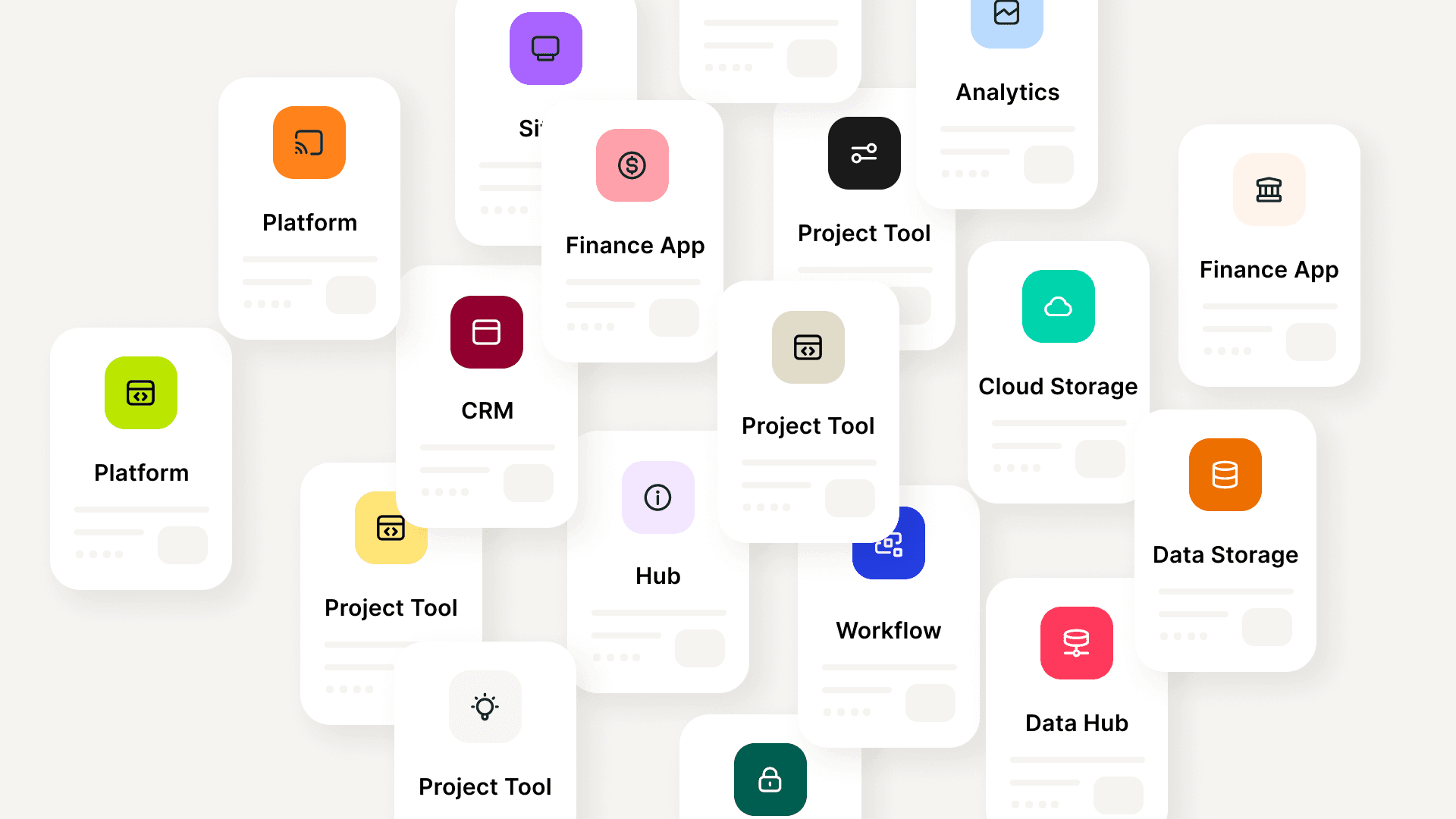


Track your SaaS spend
Get full visibility into subscriptions, owners, and upcoming renewals.

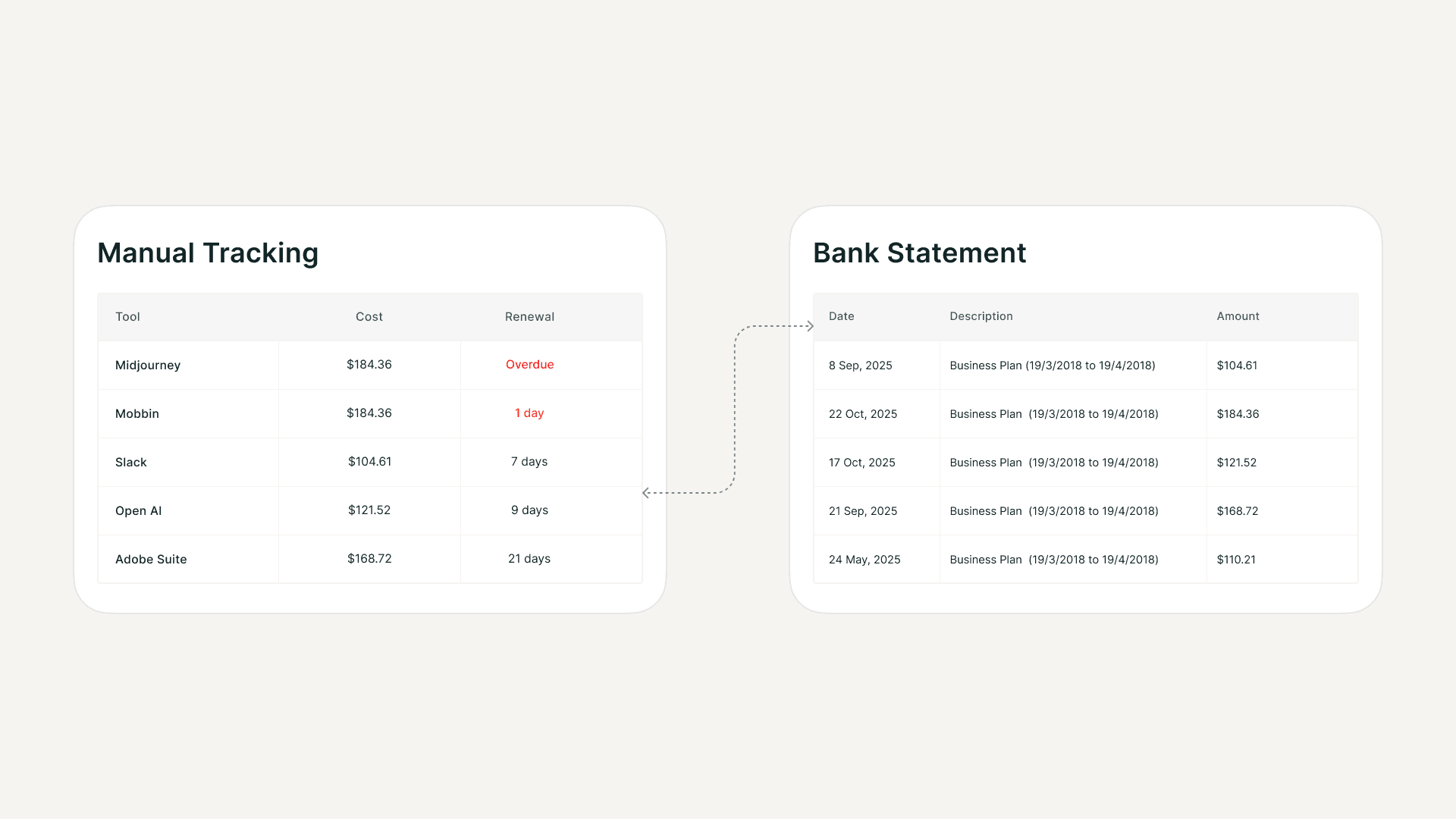

Still tracking this manually?
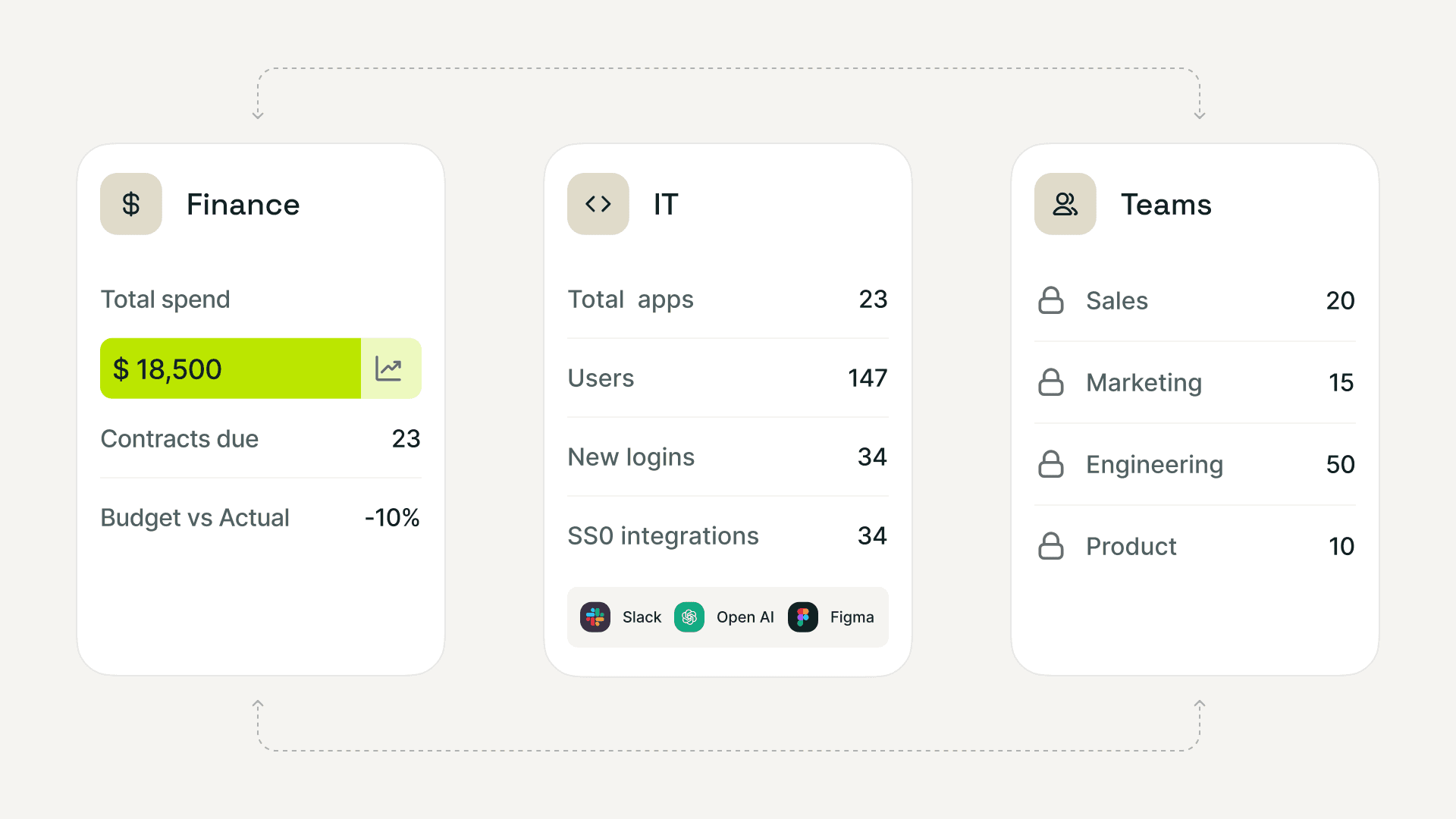
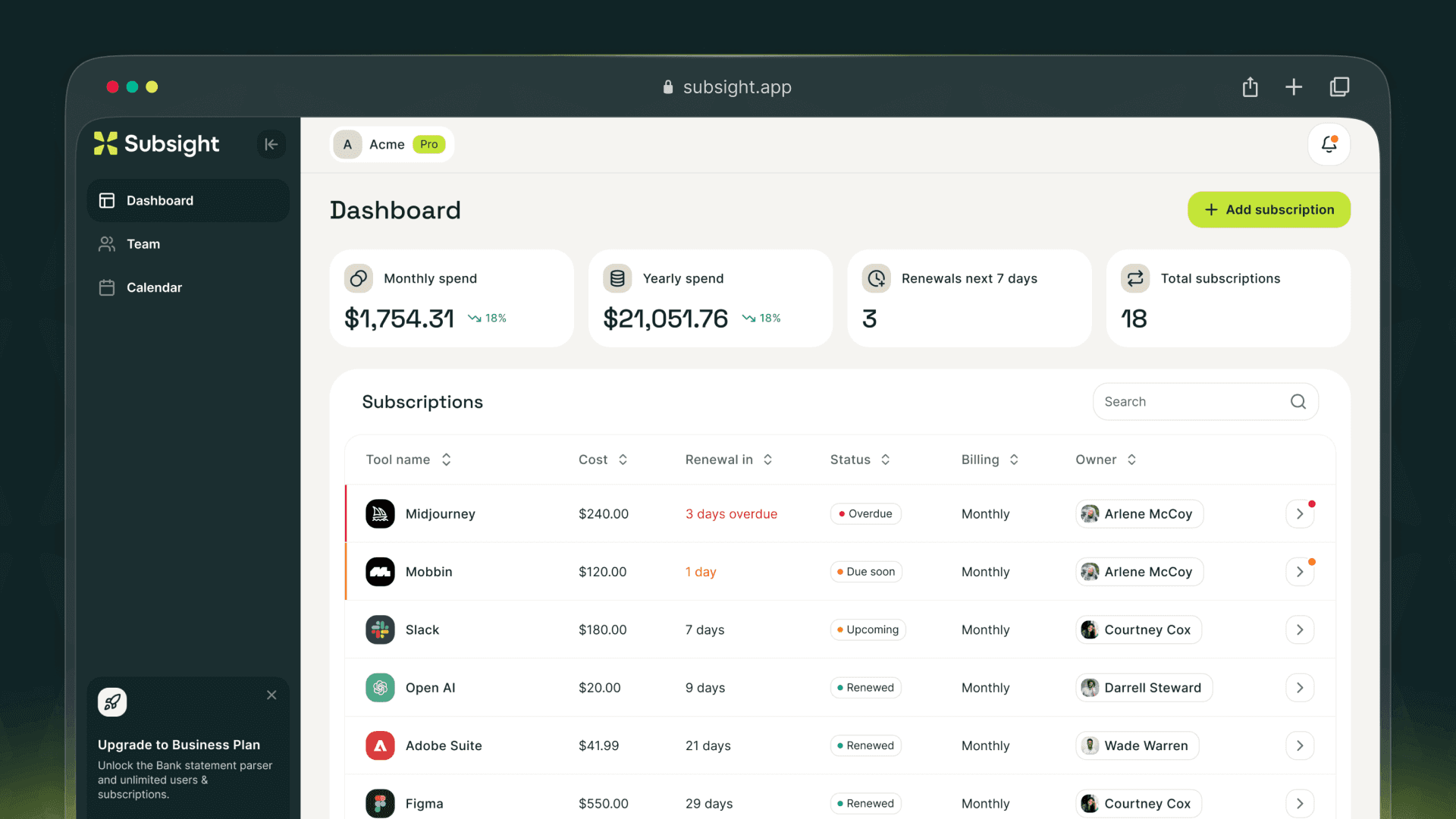
Subsight automatically maps your tools, owners, and renewal timelines in one place.
Turning subscription chaos into a strategic advantage
Most companies discover subscription waste the same way every time. A budget review. A runway scare. A sudden realization that SaaS spend feels too high.
They run an audit. They cancel a few tools. Costs go down. Then, slowly, the sprawl returns.
Why one-off audits always fail
One-off audits fail because they treat symptoms, not systems.
A spreadsheet review or a hurried cancellation pass can remove visible waste, but it does nothing to change how subscriptions are bought, owned, renewed, or forgotten. New tools get added. People change roles. Employees leave. Renewals auto-trigger. Six months later, the same problems are back, just wearing different vendor names.
Without structure, audits become reactive cleanups instead of durable solutions.

Pro Tip: The fastest way to tell if subscription waste will return is simple: ask who owns each renewal. If a tool has no clearly accountable owner and no reminder before renewal, it is almost guaranteed to auto-renew unnoticed, no matter how good the last audit was.
Systems, ownership, and reminders are what actually work
Sustainable control comes from three things working together.
First, systems. A single place where every subscription lives, with consistent data and visibility.
Second, ownership. Every tool needs a clearly accountable person who understands why it exists and what value it delivers.
Third, reminders. Renewals should never be surprises. Decisions should happen before money is locked in, not after it is already spent.
When these elements are in place, subscription management stops relying on memory, heroics, or quarterly panic.
From reactive cost cutting to proactive control
The shift is subtle but powerful.
Reactive teams cut costs when they have to. Proactive teams review spend continuously, right-size tools before renewals, and eliminate waste before it compounds.
Over time, this turns SaaS from an uncontrolled expense into a managed asset. Spend becomes predictable. Ownership becomes clear. Decisions become intentional.
Subscription chaos is not inevitable. With the right methods, structure, and automation, it becomes a source of clarity, leverage, and long-term control rather than a recurring drain on the business.
Final takeaways & immediate next steps
Finding hidden subscriptions is not about running one perfect audit. It is about building enough structure that waste cannot quietly return.
If you do nothing else after reading this guide, do the following three things this week.
Three actions you can take right now
1. Run a fast manual audit
List every recurring SaaS payment you can find across accounting, corporate cards, and expense reports. Do not aim for perfection. Aim for visibility. Even a rough list will surface forgotten tools, duplicates, and obvious waste.
2. Centralize your subscriptions in one place
Move your findings into a single system. That can start as a spreadsheet, but it should be structured with owners, costs, billing cycles, and renewal dates. The goal is to eliminate scattered knowledge and make subscriptions reviewable instead of invisible.
3. Put renewal control in place
Identify the next five renewals and make sure none of them auto-renew by accident. Review usage, assign an owner, and decide whether to keep, downgrade, renegotiate, or cancel before money is locked in.
Where Subsight fits
Once teams try to maintain this manually, the cracks appear quickly. Spreadsheets drift out of date. Owners change. Reminders get missed.
That is where Subsight becomes the natural operational hub, providing a central subscription management system that replaces scattered tracking with continuous visibility.
It applies the same logic outlined in this guide, but enforces it automatically. Subscriptions live in one place. Ownership is visible. Renewals surface before they happen. AI-powered discovery helps ensure nothing slips through the cracks.
Instead of periodically asking, “What are we paying for again?”, teams always know.
The call to action
Audit what you have.
Centralize it.
Stop renewal waste before it happens.
Whether you start with a spreadsheet or move directly to Subsight, the important part is taking control now. Every unused license and forgotten renewal you prevent is money that goes straight back into growth, runway, and optionality.

Take control of your SaaS stack
Stop guessing. Know exactly what you’re paying for and who owns it.
Frequently asked questions
How often should a business audit its SaaS subscriptions?
What is the most common source of hidden subscription waste?
Can small teams manage subscriptions without dedicated software?
Why aren’t accounting tools enough to manage SaaS subscriptions?
When does it make sense to switch to automated subscription management?


Petras Nargela

Petras is the Founder of Subsight and a veteran entrepreneur with over 10+ years of experience building and scaling digital ventures. Over the past decade, he has co-founded several successful companies that generate 7-figure annual revenue, including a Shopify app studio and a digital agency. Having managed the complex financial stacks of multiple high-growth businesses, he built Subsight to solve the "SaaS leakage" problem he experienced firsthand. He now helps B2B teams turn software chaos into a strategic, automated advantage.