Cost control
5 SaaS tools every startup thinks they need, but probably don't
Many startups overbuy software because they copy the stack of a bigger company too early. This guide shows which categories can usually wait, what lean substitutes work first, and when an upgrade is actually justified.


7 min. read

TL;DR
Most early startups do not need more software.
They need fewer tools with clearer owners, lighter setup, and stronger habits around review.
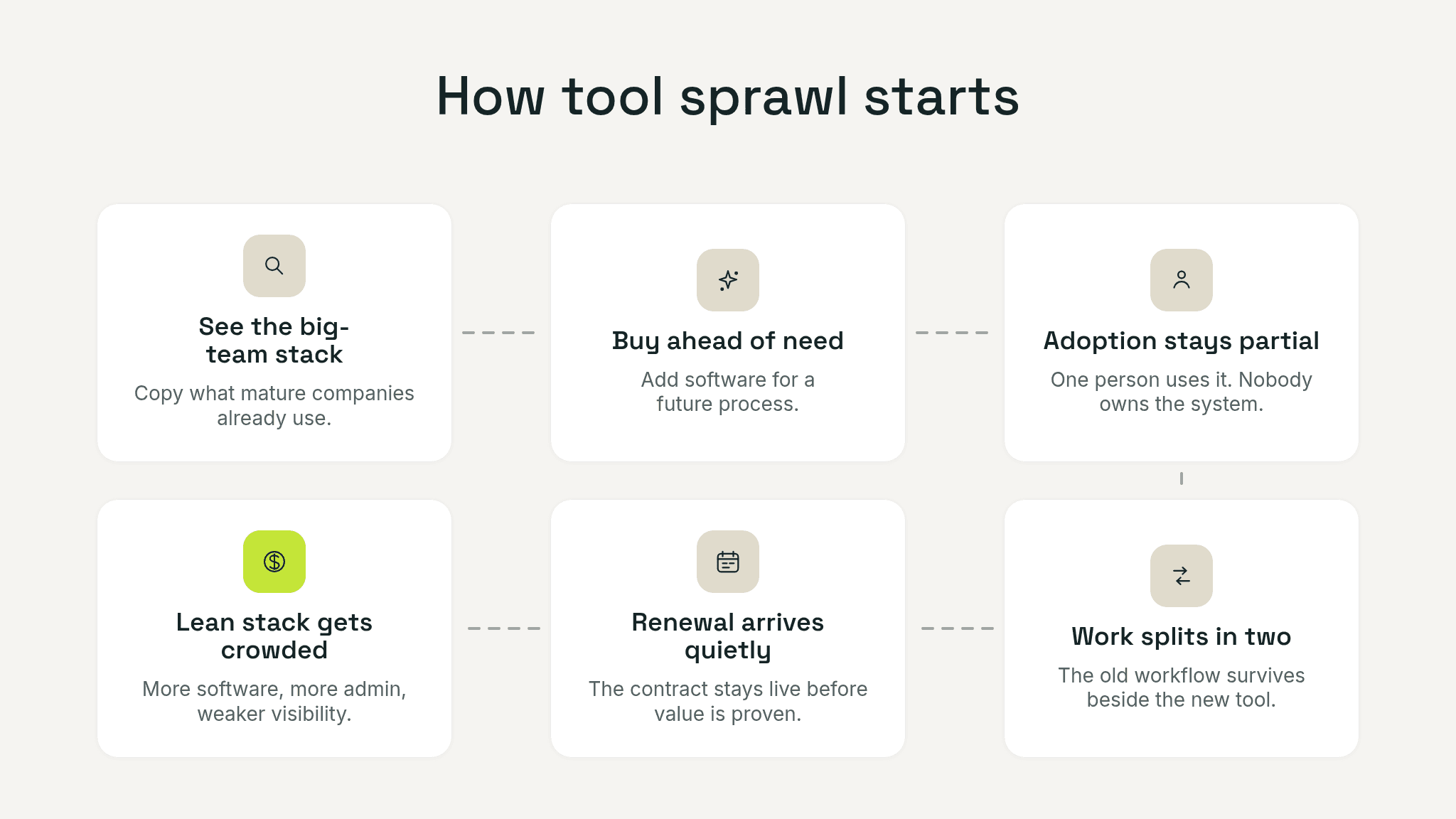
The expensive mistake is buying for a future stage.
Enterprise CRM, heavy project-management suites, and specialist customer platforms often arrive before the underlying workflow exists.
A SaaS tool and a SaaS subscription are not the same thing.
You can choose the right category and still overbuy the wrong plan, seats, or billing model.
Lean stacks are easier to run and easier to cut.
If a tool cannot prove its value quickly, it should not earn a permanent place in the stack.


Track your SaaS spend
Get full visibility into subscriptions, owners, and upcoming renewals.

What are the three types of subscriptions you should know?
The practical three-way split is simple:
Flat-rate subscriptions charge one recurring fee for a defined plan.
Seat-based subscriptions rise as more people get access.
Usage-based subscriptions grow with storage, events, credits, or other activity.
Many startups do not get into trouble because the tool is bad. They get into trouble because they buy the wrong pricing model too early. Stripe’s overview of SaaS subscription models is a useful reference if you need a clean way to explain the difference to a team.
Five SaaS tools startups overbuy first
1. Enterprise CRM
You probably do not need Salesforce at seed stage if the founder still owns most sales conversations and the pipeline changes every month. A spreadsheet, a lighter CRM, or even a disciplined deal tracker can be enough while the sales motion is still being invented.
Upgrade when deals are spread across multiple reps, reporting is breaking, and handoffs are getting lost.
2. Advanced project-management suites
Complex project software looks responsible, but it often creates admin before it creates clarity. If the team is still small, a simple board plus a weekly planning rhythm usually works better than layered workflows, custom fields, and dependency views nobody maintains.
Upgrade when multiple teams depend on shared delivery dates and lightweight tracking stops being reliable.
3. Dedicated customer-success platforms
Founders often buy these before they have enough customers, segments, or onboarding volume to justify them. Early on, a help desk, shared inbox, and clean customer notes can cover the real work without adding another system.
Upgrade when onboarding, renewals, and account risk need structured playbooks across a real success team.

Still tracking this manually?
Subsight automatically maps your tools, owners, and renewal timelines in one place.


Pro Tip: When a teammate asks for a new tool, ask for one sentence on the current bottleneck and one sentence on the upgrade trigger. If they cannot name both, the startup probably needs a tighter workflow, not another subscription.
Lean stacks win longer
The best early-stage stack is rarely the most impressive one. It is the one your team actually uses, understands, and reviews. Startups do not need to look mature through software. They need to stay lean long enough to earn the next layer of complexity.

Take control of your SaaS stack
Stop guessing. Know exactly what you’re paying for and who owns it.
Frequently asked questions
What are SaaS tools vs. SaaS subscriptions?
What are the three types of subscriptions you should know?
What are unnecessary SaaS tools for startups?
How do lean startup tools differ from overrated business software?
How do I spot startup tech stack mistakes early?


Petras Nargela

Petras is the Founder of Subsight and a veteran entrepreneur with over 10+ years of experience building and scaling digital ventures. Over the past decade, he has co-founded several successful companies that generate 7-figure annual revenue, including a Shopify app studio and a digital agency. Having managed the complex financial stacks of multiple high-growth businesses, he built Subsight to solve the "SaaS leakage" problem he experienced firsthand. He now helps B2B teams turn software chaos into a strategic, automated advantage.