Cost control
The hidden cost of free trials: why startups forget to cancel
Free trials look harmless until they roll quietly into paid subscriptions. This guide explains why teams forget to cancel and how founders or ops leads can build a lightweight system to stop trial leakage before it hits burn.


6 min. read

TL;DR
Free trials fail because memory is a weak control.
People assume they will remember to cancel later, but delayed admin tasks lose to urgent work.
The fix is operational, not motivational.
Track every trial at signup, assign one owner, and decide early whether the tool earns a paid place in the stack.
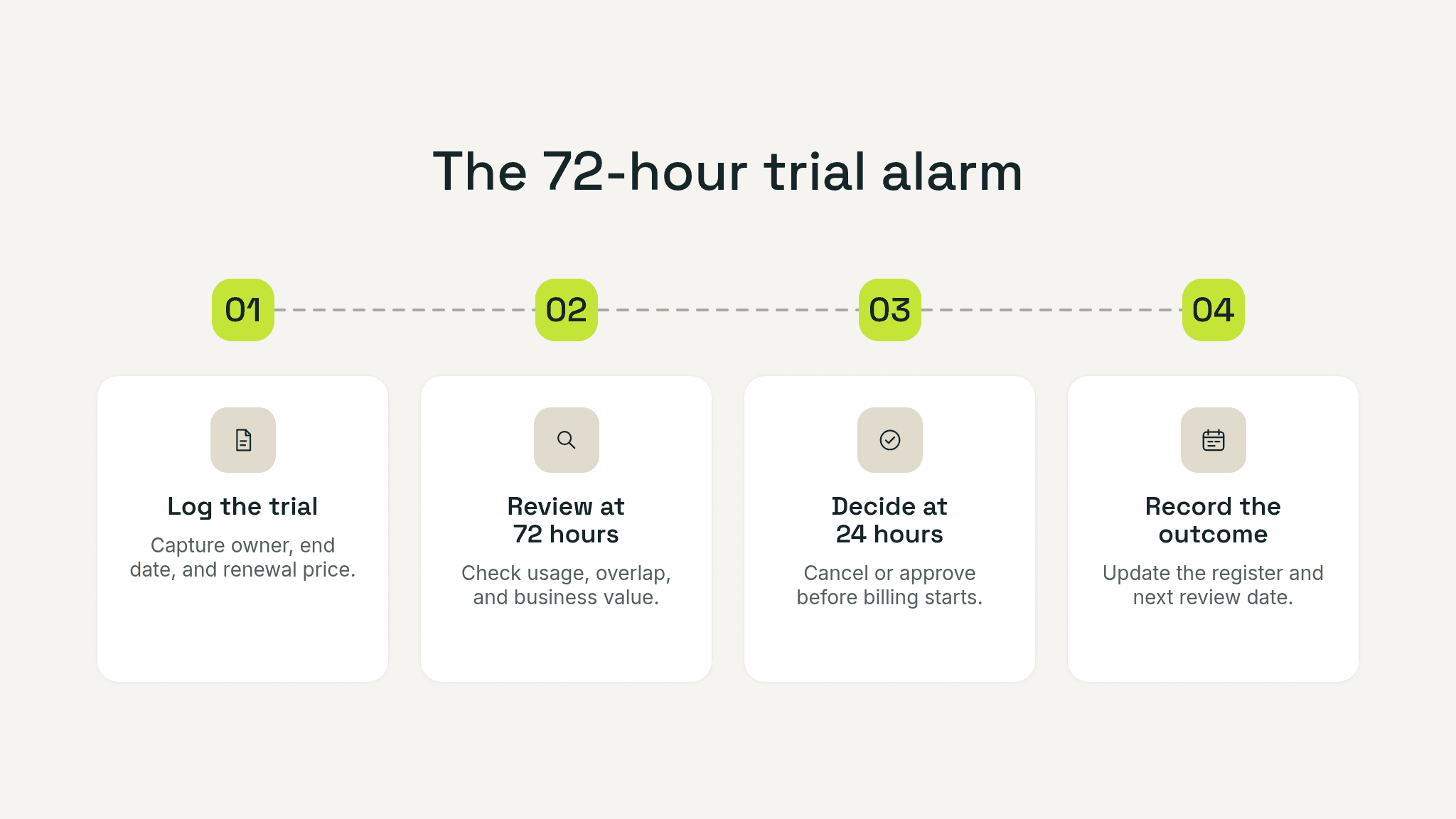
Use a 72-hour trial alarm.
One reminder on the last day is too late for busy teams. A better system warns the owner 72 hours before expiry and again 24 hours before billing starts.
Treat trials as part of SaaS cost control.
Even small renewals add up when nobody owns them, which is how the free trial trap turns into routine burn.


Track your SaaS spend
Get full visibility into subscriptions, owners, and upcoming renewals.


Still tracking this manually?
Subsight automatically maps your tools, owners, and renewal timelines in one place.

Pro Tip: Create a separate tag in the register for "trial with stored card." Those are the highest-risk entries because forgetting is enough to create spend.
What to decide before a trial becomes a subscription
Before the trial ends, the owner should answer five questions:
Did this tool solve the problem we started it for?
Who will use it after the trial?
What will it cost monthly or annually if we keep it?
Does it overlap with something we already pay for?
Do we need any data export or admin handoff before canceling?
That last point matters more than teams expect. Sometimes a tool is lightly used but still needed for one quarterly workflow or archived dataset. Low usage alone is not enough reason to keep or cancel it. You still need context, which is the same discipline behind broader spend management software and the guide on tracking unwanted subscriptions.
This is also the moment to check whether the trial belongs to a real need or just curiosity. Some tools should graduate into the stack. Others were useful to test, but not useful enough to justify another paid line item.
Turn free trials into decisions, not drift
Free trials are not the problem. Unowned trials are. Treat every new trial like a future subscription from day one, and fewer tools slip into the stack by accident.

Take control of your SaaS stack
Stop guessing. Know exactly what you’re paying for and who owns it.
Frequently asked questions
What is the best way to manage free trials for business?
How do I track free trials efficiently?
When should I set a cancel subscription reminder?
Why do teams forget to cancel free trials?
Should startups avoid free trials completely?


Petras Nargela

Petras is the Founder of Subsight and a veteran entrepreneur with over 10+ years of experience building and scaling digital ventures. Over the past decade, he has co-founded several successful companies that generate 7-figure annual revenue, including a Shopify app studio and a digital agency. Having managed the complex financial stacks of multiple high-growth businesses, he built Subsight to solve the "SaaS leakage" problem he experienced firsthand. He now helps B2B teams turn software chaos into a strategic, automated advantage.